
 By Hadrian - YO2BTW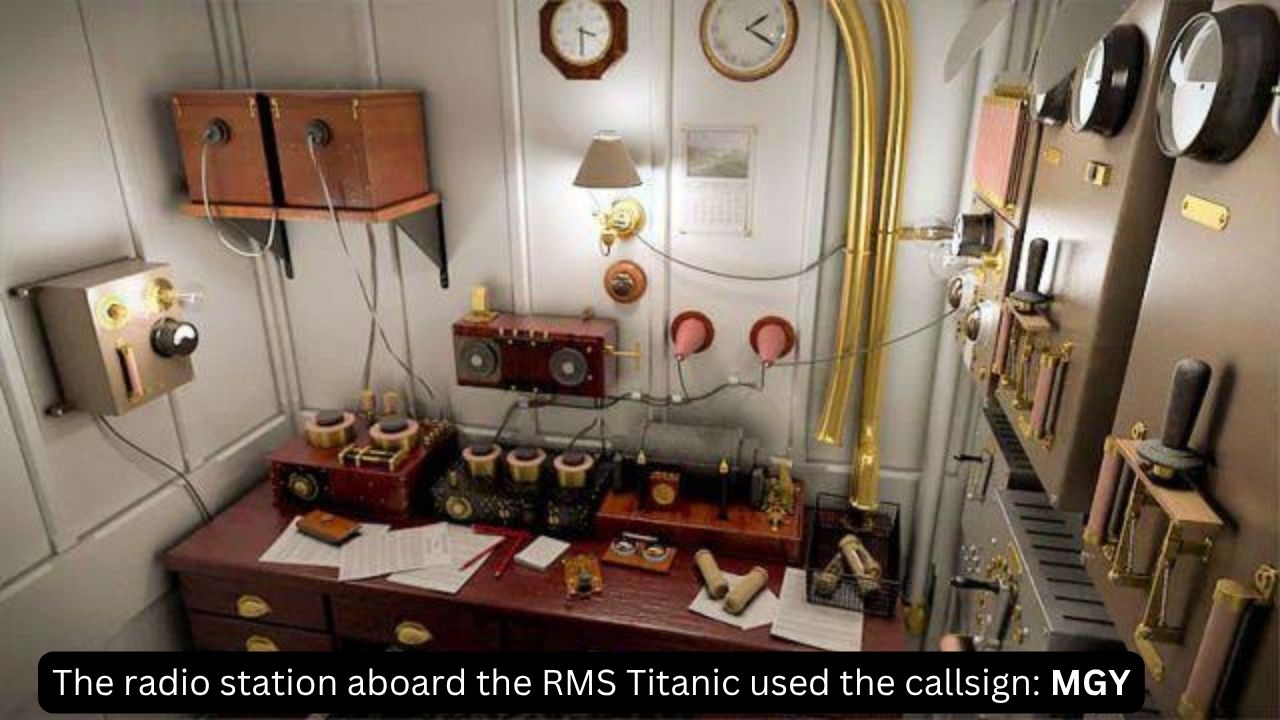
Titanic and the Birth of Modern Maritime Radio Communications


Introduction
The sinking of the RMS Titanic on the night of April 14–15, 1912, was not only one of the most famous maritime disasters in history, but also a turning point in the evolution of radio communications. For amateur radio operators, this event remains a defining moment in the development of emergency communications (EmComm).
Technical Overview – Titanic at a Glance
- Builder: Harland and Wolff
- Operator: White Star Line
- Length: 269 meters
- Gross tonnage: ~46,000 tons
- Maximum speed: 23 knots
- Capacity: ~2,200 people (passengers + crew)
- Propulsion: Steam-powered engines and turbines
Titanic was considered “unsinkable” due to its watertight compartments—an assumption that proved tragically wrong.
The Marconi Wireless Station – Technology of the Time


On board Titanic was a wireless telegraphy system provided by the Marconi Company.
The radio station aboard the RMS Titanic used the callsign: MGY
This was a Marconi-assigned callsign, not a national callsign in the modern sense (like those used by amateur radio operators today).
Interesting details
- The callsign MGY was assigned by the Marconi Company
- It was used in all official wireless transmissions from the ship
- The prefix “M” was typical for Marconi-operated stations
- At the time, there was no fully standardized international callsign system (as later regulated by the ITU)
How it was used in practice
Operators such as Jack Phillips and Harold Bride would send messages like:
CQD CQD CQD DE MGY MGY MGY
(Calling all stations… this is Titanic)
or later:
SOS DE MGY
Equipment Used:
- Spark-gap transmitter
- Receiver using detector technology (coherer / crystal)
- Estimated power: ~1.5 kW
- Frequencies around 500 kHz (classic maritime distress band)
- Long wire antenna strung between masts
Radio Operators:
- Jack Phillips – senior operator, highly experienced
- Harold Bride – junior operator
They were employees of the Marconi Company, not direct crew members—an important detail that influenced operational priorities.
The Night of the Disaster – What Happened
On April 14, 1912, Titanic received multiple iceberg warnings. Unfortunately, many of these messages never reached the bridge, as the radio operators were overwhelmed transmitting passengers’ private messages.
At 11:40 PM, Titanic struck an iceberg.
Distress Signals Sent:
- Initially: CQD (Marconi distress signal)
- Later: SOS (newer, simpler emergency signal)
Example transmission:
“CQD CQD CQD… this is Titanic… we have struck an iceberg… require immediate assistance”
Ships That Received the Signal
🔹 RMS Carpathia
- Successfully received the distress call
- Captain: Arthur Rostron
- Immediately changed course and steamed at full speed through ice
🔹 SS Californian
- Closest ship to Titanic
- Radio operator was off duty (!!!)
- Did not respond to distress calls
👉 This remains one of the most controversial aspects of the disaster.
Rescue of Survivors


- Carpathia arrived approximately 4 hours later
- Rescued around 705 survivors
- Over 1,500 lives lost
Operator Jack Phillips continued transmitting distress calls until near the end and sadly perished. Harold Bride survived.
Impact on Radio Communications
The Titanic disaster fundamentally changed maritime radio regulations:
Key Changes Introduced:
- Mandatory 24-hour radio watch on ships
- Continuous monitoring of the distress frequency (~500 kHz)
- Standardization of the SOS signal
- Stricter international safety regulations
These changes were later formalized in international agreements and became the foundation of modern maritime safety systems.
Lessons for Amateur Radio
For the amateur radio and EmComm community:
- Importance of continuous monitoring
- Strict radio discipline
- Prioritizing emergency traffic
- Building redundant communication systems
These principles remain essential today in emergency communications and survival scenarios.
Conclusion
Titanic was not just a maritime disaster—it marked the beginning of a new era in radio communications. Without the Marconi wireless system onboard, there likely would have been no survivors.
For radio amateurs, one lesson stands above all:
👉 Communication saves lives.
73 de Hadrian – YO2BTW
You have brought to our attention some very dramatic facts… but, it is evidence that human society often evolved due to dramatic collective incidents. And, we never stop learning, after we make huge, incredible, and painful mistakes.
And what is essential to mention is that communications remain the major milestone in every human interaction.
Thank you! 73 de Felis, YO2MGI!