
 By Hadrian - YO2BTW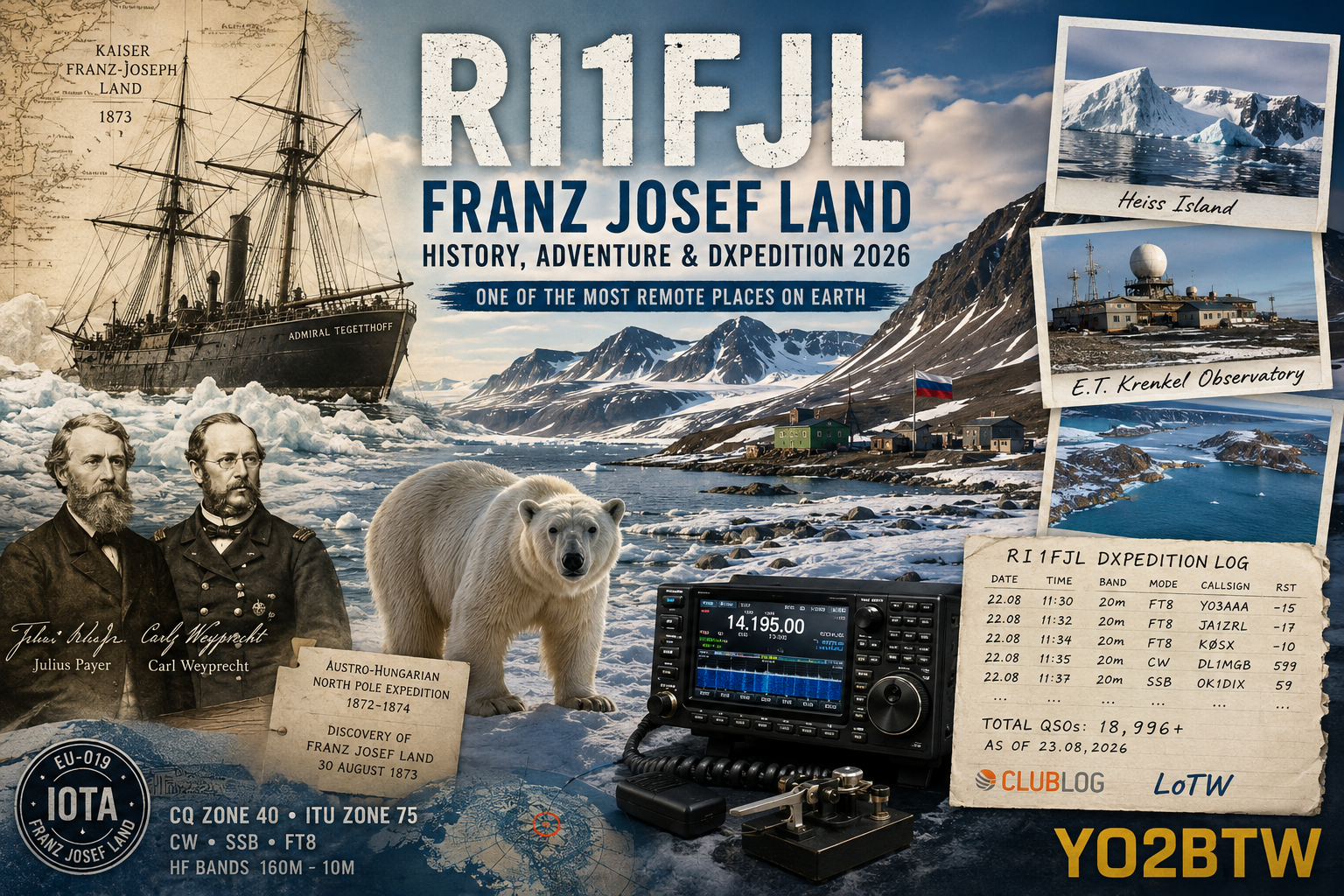
RI1FJL – Franz Josef Land: Between Polar History, Adventure and DX
Franz Josef Land. For most people, the name may not mean very much. For a radio amateur, especially a DX enthusiast, it has a completely different significance.
These days, the callsign RI1FJL can be heard coming from one of the most remote places on Earth: Franz Josef Land, in the Arctic Ocean.
And I thought this would be a good opportunity to learn a little more about this place. Because beyond being another rare DX entity to add to the log, Franz Josef Land has an extraordinary history.
It is Russian territory that still carries the name of an Austro-Hungarian emperor, and it was discovered as a result of an expedition that, honestly, sounds more like the plot of an adventure movie than a scientific voyage.
And today, more than 150 years later, people are returning there — this time carrying transceivers, antennas and amplifiers.
Where is Franz Josef Land?
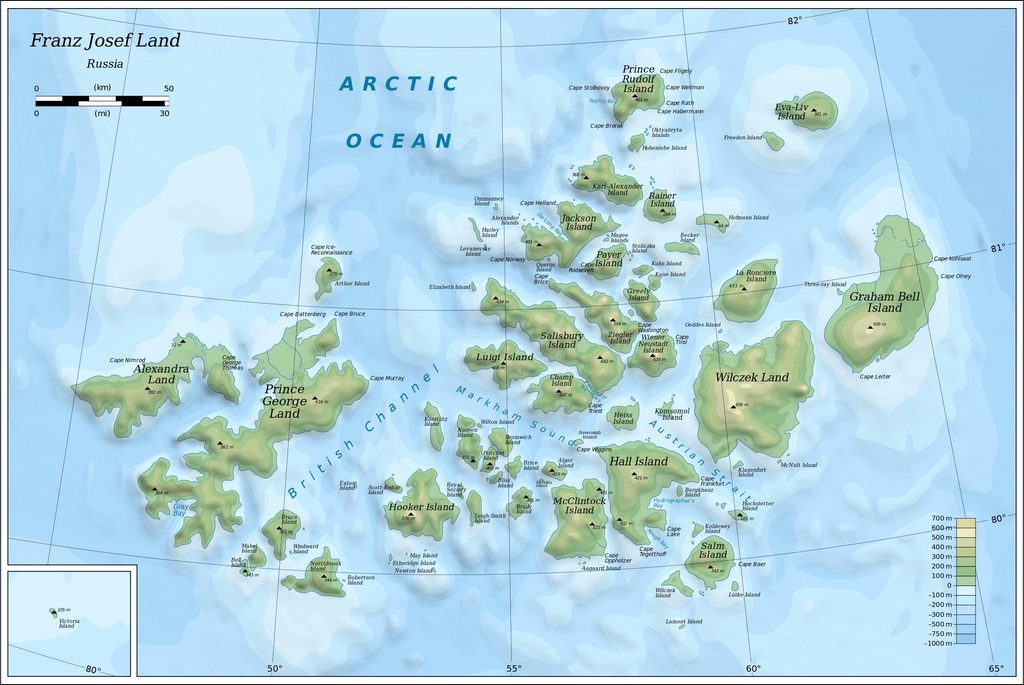
Franz Josef Land is an archipelago of around 190 islands located in the Arctic Ocean, north of Novaya Zemlya and east of Svalbard.
It is one of the northernmost territories of Eurasia and lies entirely within the Arctic region.
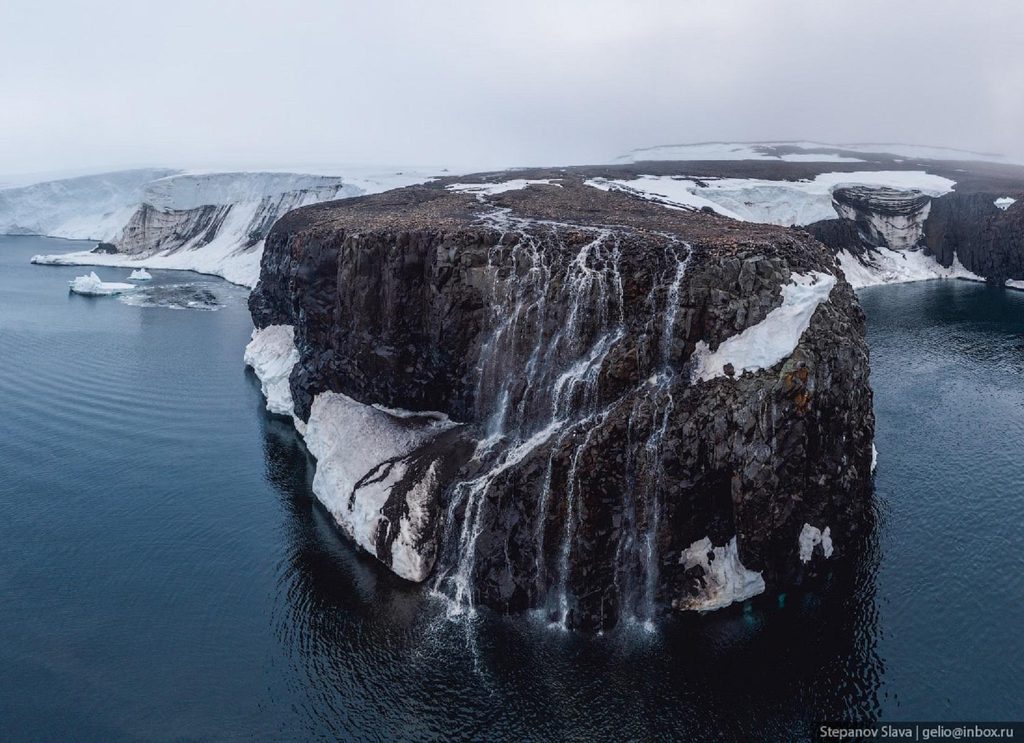
Most of the islands are covered by glaciers, and the environmental conditions are extremely harsh.
This is not a place where you simply arrive, rent a car and look for a hotel.
Here, logistics are an essential part of any expedition.
For amateur radio operators, Franz Josef Land is particularly interesting because it represents a very rare DXCC entity, and activating it requires considerable logistics, expense and risk.
Why is it called Franz Josef Land?
This is one of the most interesting aspects of the territory.
The name is not Russian.
Franz Josef Land was named after Emperor Franz Joseph I of Austria, Emperor of Austria and King of Hungary.
In 1873, the Austro-Hungarian North Pole Expedition, led by Julius von Payer and Carl Weyprecht, reached this previously unknown region of the Arctic.
They named the newly discovered territory Kaiser-Franz-Joseph-Land, in honour of the emperor.
Today, the islands are part of the Russian Federation, but the Austro-Hungarian imperial name has survived.
It is one of those fascinating little historical paradoxes: Russian territory in the Arctic still bears the name of an emperor of a monarchy that disappeared in 1918.
The discovery in 1873
The story begins in 1872, when the ship Admiral Tegetthoff departed on an Austro-Hungarian expedition toward the polar regions.
The expedition was led by Carl Weyprecht and Julius Payer.
Their objectives were extremely ambitious for the time. The explorers hoped to find a navigable route through the Northeast Passage and, if possible, approach the North Pole.
But the Arctic had other plans.
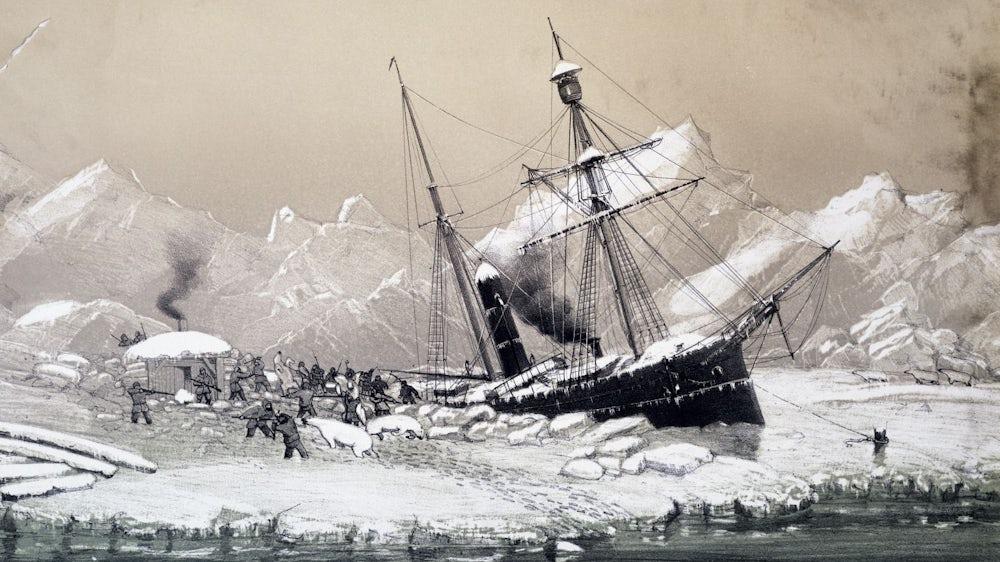
The ship became trapped in the sea ice and began drifting with the pack ice. The crew could no longer control the ship’s actual direction.
Months passed while the men remained trapped in the ice.
Then, on 30 August 1873, something happened that nobody on board could have expected.
Mountains appeared in the distance.
Land.
An unknown territory that was not yet properly represented on European maps.
It was Franz Josef Land.
The discovery was officially announced, and Julius Payer began exploring and mapping the archipelago.
The expedition had not reached the North Pole, but it had made a major geographical discovery.
A ship trapped in the ice — and a desperate retreat
The truly remarkable part of the story came after the discovery.
The Tegetthoff could not be freed.
In 1874, after an extremely difficult Arctic winter, the expedition made a desperate decision: abandon the ship.
The men began travelling south across the ice, using sledges and carrying boats with them.
In other words, a naval expedition had suddenly become an overland survival expedition.
Think about what that meant.
There was no GPS.
No satellite phones.
No modern polar clothing.
No weather stations every few hundred kilometres.
They had incomplete maps, navigation instruments, food supplies and the experience of men who knew that one serious mistake in the Arctic could be fatal.
After an extraordinarily difficult journey, the expedition eventually reached the Novaya Zemlya region and was rescued by Russian vessels.
The expedition returned to Europe in 1874.
How did Franz Josef Land become Russian?
This part of the story is more complicated.
Although the Austro-Hungarian expedition discovered and explored the archipelago, the legal status of the territory was not as straightforward as we might assume today.
Franz Josef Land never became an Austro-Hungarian colony in the traditional sense.
After the collapse of Austria-Hungary in 1918, the situation became even less clear.
During the 1920s, the Soviet Union began strengthening its presence in the Arctic.
The important moment came on 15 April 1926, when the USSR issued a decree claiming Arctic territories between the Soviet coast and the North Pole according to what became known as the sector principle.
Franz Josef Land was included in this claim.
Soviet expeditions, weather stations and polar research followed.
Soviet presence became permanent, and after the collapse of the USSR, the territory remained part of the Russian Federation.
Today, Franz Josef Land is Russian territory.
An important place in the exploration of the North Pole
Franz Josef Land was not important only because it had been discovered by the Austro-Hungarian expedition.
In the decades that followed, the archipelago became an important base for Arctic exploration.
Explorers such as Fridtjof Nansen reached the region, and the islands were used as staging points for polar expeditions.
As maps became more accurate, some of the supposed islands and territories reported by early explorers turned out not to exist.
The Arctic was extremely difficult to map.
Fog, polar light, sea ice and enormous distances meant that an observation made from dozens of kilometres away could easily become a cartographic error.
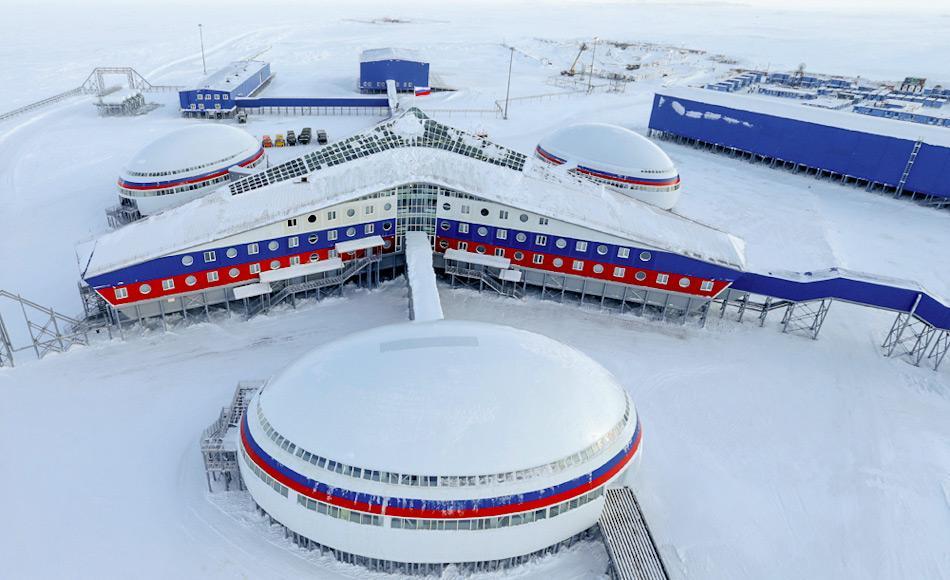
During the Soviet period, access for foreigners became extremely restricted. The archipelago also acquired an important military and strategic role.
After 1990, access for foreign researchers gradually became possible again, and the region once more became a destination for scientific expeditions and, later, controlled polar tourism.
Heiss Island – the destination of RI1FJL
And now we come to the present.
In August 2026, the RI1FJL team travelled to Franz Josef Land for a new DXpedition.
Their destination is Heiss Island, one of the islands in the archipelago, known for its geophysical and meteorological research.
The island is home to the E.T. Krenkel Geophysical Polar Observatory.
For a DXpedition, this makes a huge difference compared with having to establish a completely autonomous camp on the ice.
But that does not make the expedition easy.
Equipment and supplies still have to be transported into the Arctic, and weather and sea ice can change plans very quickly.
The team travelled aboard the yacht Mariya, and the journey towards Franz Josef Land was an adventure in itself.
They encountered dense fog, strong winds and waves reaching approximately 5–6 metres.
During the journey they also operated as RI1FJL/MM.
Eventually, on 21 August, the team reached the Franz Josef Land area and continued towards Heiss Island.
The first QSOs from the DXpedition location were made on 22 August 2026.
RI1FJL – when polar history reaches the amateur radio log
This is where the story becomes especially interesting for us radio amateurs.
More than 150 years ago, men reached Franz Josef Land after being carried for months by the drifting ice.
Today, from that same remote territory, radio signals are travelling around the world.
The callsign is:
RI1FJL
And for anyone interested in DX, this is a callsign worth watching.
The expedition plans to operate the HF bands in CW, SSB and FT8, using multiple stations and antenna systems.
Low-band operation is also planned, where making a QSO from such a far-northern location can be a real challenge.
The equipment includes transceivers such as the Elecraft K3 and SunSDR2 DX, Expert 1.3K-FA amplifiers, as well as several antenna systems, including Spiderbeam antennas and antennas for 40, 80 and 160 metres.
The objective is simple: as many QSOs as possible, on as many bands and modes as possible.
The first results are already impressive
RI1FJL is not merely “on its way” into the logs.
It is already there.
According to Club Log, the first QSOs were made on 22 August 2026 at 11:30 UTC.
And the log grew extremely quickly. At the update available for 23 August, Club Log showed 18,996 QSOs. (clublog.org)
That shows just how much interest there is in this activation within the DX community.
For some operators, a single QSO with RI1FJL may mean completing a needed DXCC entity or adding another band to an award.
For others, it is simply the satisfaction of being able to say:
“I worked Franz Josef Land.”
Why is it so difficult to activate?
If we look at the map, it seems simple.
Put a marker on Google Maps and say: “That’s where we’re going.”
In reality, Franz Josef Land is one of those locations where logistics may cost more than the radio equipment itself.
The team transported approximately 800 kg of equipment and supplies, and the project has an estimated budget of around US$80,000.
That means maritime transport, fuel, food, survival equipment, radios, antennas, amplifiers, logistics and, very importantly, the possibility of being delayed or stranded if weather or ice conditions deteriorate. (wia.org.au)
That is why an expedition such as RI1FJL is not simply a radio activation.
It is a genuine Arctic expedition.
There is also an interesting connection with amateur radio
Heiss Island is named after Peter Ludwig von Heiss, while the region has a long history of polar research and Soviet/Russian scientific infrastructure.
And the observatory on the island carries the name of Ernst Krenkel.
For radio amateurs, that name is particularly familiar.
Ernst Krenkel, callsign RAEM, was a famous Soviet radio operator and polar explorer.
This is one of the reasons Franz Josef Land has such a special resonance in the amateur radio world: here, the history of polar exploration and the history of radio come together.
A DX contact with a story behind it
For me, this is probably the most interesting thing about RI1FJL.
When you hear the callsign in a pile-up, it is very easy to think only:
“I have to work them!”
But if you stop for a moment and think about where those operators actually are, things look very different.
Behind a few seconds of radio contact there is:
a journey across the Arctic Ocean,
an island covered by ice,
more than 150 years of history,
polar expeditions,
ships trapped in the ice,
weather stations,
explorers who risked their lives,
hundreds of kilograms of equipment transported into the Arctic,
and finally, a few watts or a few hundred watts going into an antenna and reaching us.
That is the beauty of DX.
It is not only about the signal.
It is about the place the signal comes from.
RI1FJL – a DX worth having in the log
At the time of writing, the RI1FJL expedition is active from Franz Josef Land, and its logs are already being uploaded to Club Log. (clublog.org)
For those following the operation, it is worth checking the cluster and Club Log regularly, because propagation in the Arctic can change very quickly.
For anyone who does not yet have Franz Josef Land in the log, this is one of those DXpeditions worth spending a few extra minutes chasing.
And for me, RI1FJL is also an opportunity to look at a QSO in a slightly different way.
The next time I hear RI1FJL in my headphones, I won’t hear just a rare callsign.
I will picture Franz Josef Land — a land discovered by men who set out towards the North Pole and ended up discovering an unknown archipelago, which today, more than a century and a half later, continues to attract explorers, scientists and… radio amateurs.
73 de Hadrian – YO2BTW!
RI1FJL – Quick Facts
Callsign: RI1FJL
Territory: Franz Josef Land, Russia
Island: Heiss Island
IOTA: EU-019
Locator: LR80TN
CQ Zone: 40
ITU Zone: 75
Modes: CW, SSB, FT8
Bands: HF – including 160 m to 10 m
Team: 6 operators
Planned duration: approximately 15 days
QSL: via M0URX
Log: Club Log / LoTW
Operational details and the exact schedule should always be checked against the expedition’s official information, as Arctic weather, sea ice and local conditions can change plans very quickly. (dx-world.net)
Sources
- DX-World – updates on the RI1FJL expedition and its journey to Franz Josef Land. (dx-world.net)
- Club Log – current RI1FJL expedition log and statistics. (clublog.org)
- Russian DX Team – RI1FJL expedition information. (rudxt.org)
- Wireless Institute of Australia – information about the journey to Franz Josef Land and expedition logistics. (wia.org.au)
- Austrian Academy of Sciences / Polar Research – history of the Austro-Hungarian expedition and the discovery of the archipelago. (polarresearch.at)
- Die Welt der Habsburger – origin of the Franz Josef Land name. (habsburger.net)
 Felis - YO2MGI