
 By Felis - YO2MGI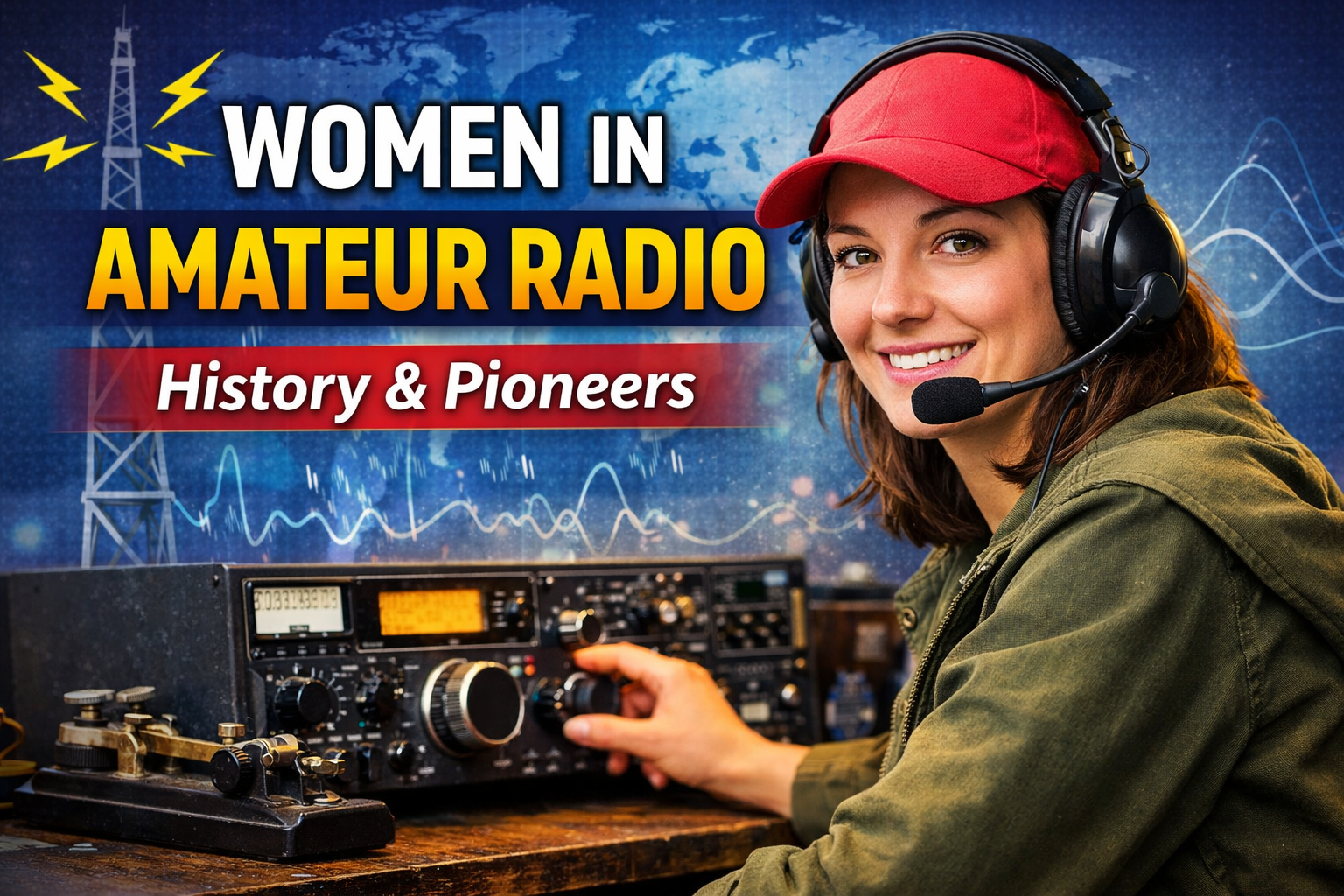
Women in Amateur Radio: Historical Overview
Women have played an important role in amateur radio from the very beginning. When a female voice is heard on the bands, operators’ attention sharpens, and every transmitted word carries a special emotion that only women can convey in the radio environment.
Beyond this emotional nuance, women’s presence in amateur radio worldwide is natural, useful, enjoyable, and competitive. From the early pioneers to participants in DXpeditions and challenging contests, the history of women in amateur radio spans over 100 years and is marked by communication, knowledge transfer, and remarkable achievements.
Early Steps (1900–1920)
The first women amateur radio operators appeared in the USA in the early 20th century:
- Mabelle (Mabel) Kelso (USA) – one of the first certified maritime radio operators in 1912 under the Wireless Ship Act of 1910.
- Gladys Kathleen Parkin (USA) – licensed at 15 years old in 1916, callsign 6SO.
- Mrs. M. J. Glass (San Jose, California) – operated the FNFN station in 1910.
- Olive Heartberg (OHK, New York City) – active from 1910.
The numerical growth led to the creation of organizations dedicated to women, and the term YL (Young Ladies) became standard for female operators.
Young Ladies Radio League (YLRL)
- Founded in the USA in 1939 by Ethel Smith, K4LMB.
- Purpose: identify licensed women and bring them together for support and experience exchange.
- First members: W7FWB, W9NBX, W8TAY.
- Activities: newsletter YL Harmonics, contests, YL conventions.
Notable Women in Amateur Radio
- Eunice Randall Thompson (W1MPP) – one of the first women engineers and radio operators, active at station 1XE/WGI, 1919–1922.
- Brenda Bell (New Zealand) – made the first radio contact to South Africa in 1927.
- Theresa M. Korn (USA) – engineer and pilot, passionate about radio; an example of aviation + radio integration.
Evolution and Modern Status
In 1931, there were only ~86 licensed women in the USA, compared to ~18,000 men.
YLRL still exists today with members of all ages, organizing contests, scholarships, and dedicated nets.
Women in Amateur Radio in Europe
How the Movement Evolved
- 1920s: first steps, few examples, often unofficial.
- 1930s: first official licenses in Central and Eastern Europe.
- Post-1939: YLRL USA begins communication with Europeans.
- Post-WW2: women re-enter radio, especially in Czechoslovakia, Romania, UK, France, and Nordic countries.
First YLs in Europe
- 🇨🇿 Jarmila Heřmanová (OK2YL, Czechoslovakia, 1931) – first officially licensed woman in Central Europe, active on CW and voice with international connections during the interwar period.
- Lelia Constanța Băjenescu (CV5BI, Romania) – first woman amateur radio operator in Romania and Eastern Europe.
Biography: Lelia Băjenescu
- Born: May 21, 1908, Corlate, Dolj County, Romania.
- Married Ioan T. Băjenescu, initiator of the first Romanian amateur radio broadcast on short waves (1926).
- Learned radiotelephony and Morse code, participating in construction and operation of transmission/reception stations.
- In 1926 became Romania’s first female radio operator using her husband’s callsign, YL CV5BI.
- Achieved tens of thousands of radio contacts across all continents.
- 🇬🇧 United Kingdom: first individual licenses for female operators in 1926; YLs participated in contests in the 1930s.
- 🇫🇷 France & Germany: first female licenses after 1930, mainly in urban intellectual circles; Germany had interwar restrictions limiting female access, though licensed operators existed.
Importance of the Pioneers
- Changed perception of women in radio: from “passive support” to active operators.
- Created supportive communities (YLRL, local organizations).
- Serve as role models for young women, showing that passion for radio, DX, and international projects is accessible to all.
73 de Felis – YO2MGI
 Hadrian - YO2BTW