
 By Hadrian - YO2BTW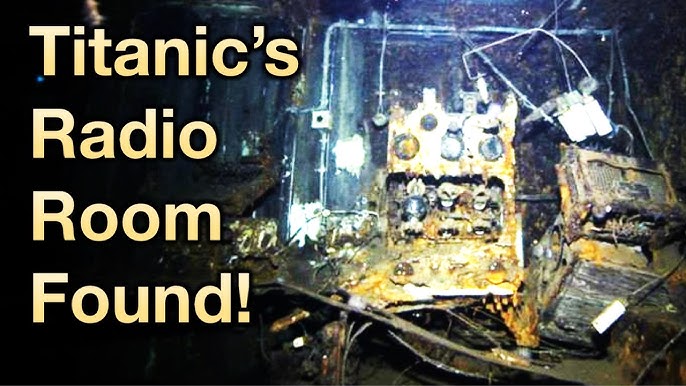
100 Years Since Titanic – A Tragedy That Changed Radio Communications Forever


Introduction – 100 Years Later
April marks 100 years since the tragic sinking of the RMS Titanic, a disaster that continues to resonate across generations.
On the night of April 14–15, 1912, over 1,500 lives were lost in the icy waters of the North Atlantic. One century later, commemorations around the world honor the victims, the survivors, and the lessons learned—especially in the field of radio communications, where Titanic played a defining role.
Memorial ceremonies, radio tributes, and special event stations have marked this centennial, reminding us that beyond the tragedy lies a legacy that still shapes modern emergency communications.
Titanic – Technical Overview
- Builder: Harland and Wolff
- Operator: White Star Line
- Length: 269 meters
- Gross tonnage: ~46,000 tons
- Speed: 23 knots
- Capacity: ~2,200 people
Designed as the pinnacle of maritime engineering, Titanic was believed to be nearly unsinkable—until fate proved otherwise.
The Radio Station – Callsign MGY


The Titanic’s wireless station, operated by the Marconi Company, used the callsign: MGY
Radio Operators:
- Jack Phillips – senior operator
- Harold Bride – junior operator
Equipment:
- Spark-gap transmitter (~1.5 kW)
- Morse code (CW) operation only
- Operating frequency around 500 kHz
- Long-wire antenna system
At the time, wireless communication was still a relatively new technology—but on Titanic, it proved both vital and imperfect.
The Night That Changed Everything
On April 14, 1912, Titanic received multiple iceberg warnings. Due to heavy passenger traffic, not all messages reached the bridge.
At 23:40, the ship struck an iceberg.
Distress Calls:
- CQD (traditional Marconi distress signal)
- SOS (newly introduced, simpler signal)
Transmissions included:
CQD CQD CQD DE MGY
SOS DE MGY
Despite the urgency, not all nearby ships responded in time.
Rescue and Controversy
🔹 RMS Carpathia
- Responded immediately
- Captain: Arthur Rostron
- Rescued ~705 survivors
🔹 SS Californian
- Closest vessel
- Radio operator off duty
- Did not respond
Operator Jack Phillips remained at his post until the end and lost his life. Harold Bride survived and later recounted the events.
🛟 Commemoration and Radio Legacy


7
The 100th anniversary has been marked by:
- International memorial ceremonies at sea
- Special amateur radio activations recreating historic callsigns
- Renewed interest in 500 kHz and maritime CW heritage
- Educational programs about early wireless communication
For the radio community, Titanic is not just history—it is a living lesson.
Lasting Impact on Radio Communications
The Titanic disaster led to major reforms:
- ✅ Mandatory 24-hour radio watch
- ✅ Continuous monitoring of distress frequencies
- ✅ Standardization of SOS
- ✅ International regulation of maritime communications
These changes laid the groundwork for today’s global safety systems, including GMDSS.
Lessons for Amateur Radio (YO2BTW Perspective)
For us, as radio amateurs:
- Always monitor and be ready
- Prioritize emergency traffic
- Maintain discipline and clarity
- Build redundant systems for resilience
These principles remain essential in EmComm, survival, and off-grid communication scenarios.
Conclusion
A century later, Titanic still speaks to us—not through its grandeur, but through its lessons.
From the callsign MGY to the first widespread use of SOS, this tragedy reshaped radio communication forever.
👉 Communication saves lives—then, now, and always.
73 de Hadrian – YO2BTW
 Felis - YO2MGI