
 By Hadrian - YO2BTW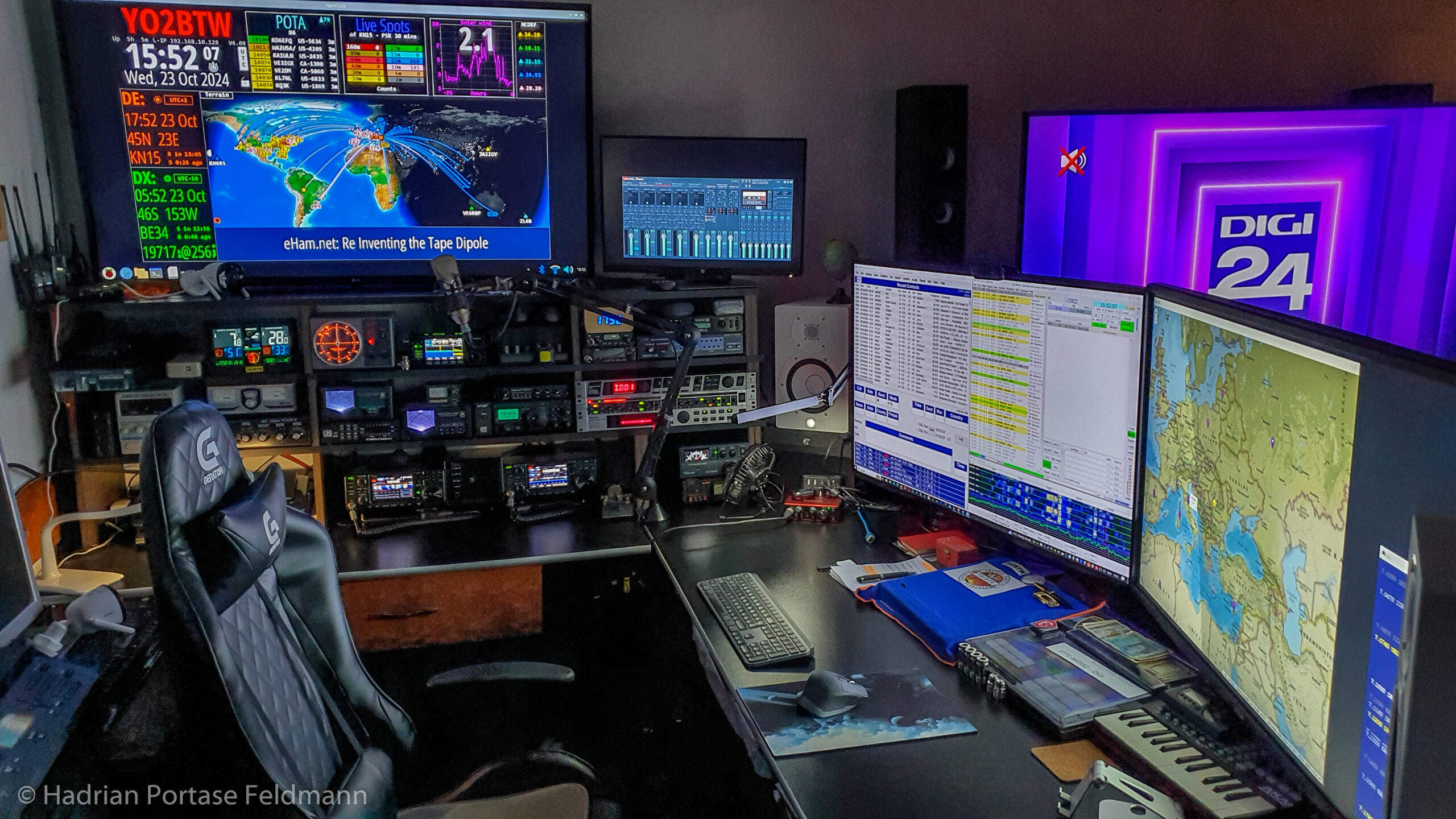
Radio communication has always been more than just a hobby.
It has been a window to the world, a form of freedom, and a powerful exercise in technological resilience.
And the place where all of this happens – the personal space of a radio amateur – carries a name with deep historical roots: the Ham Shack.
But in the modern world of SDRs, AI, and multimedia production, this term takes on a new shape.
Today, it naturally evolves into something broader: the Radio Studio.
🔹 What “Ham Shack” Really Means
The word “ham” dates back to the early 1900s.
At that time, professional telegraph operators used “ham-fisted” as a slightly mocking term for amateurs — those who were less precise in their keying.
Instead of rejecting it, amateur operators proudly embraced the name “HAM,” turning it into a badge of honor and identity.
The word “shack” simply means a small hut or cabin — a modest, personal space.
In the early days of radio, operators built their own small rooms or sheds, filled with home-made transmitters, vacuum tubes, wires, and antennas.
These humble spaces were the birthplace of global communication.
Thus, the Ham Shack became more than a room — it became a symbol of passion, curiosity, and independence.
🔹 The Digital Transformation
As time went on, shack setups evolved.
Alongside classic transceivers came computers, digital interfaces, SDRs, control panels, and internet connectivity.
The radio amateur of today is often an operator, an engineer, a communicator, and a content creator all at once.
While “Ham Shack” remains an iconic term in amateur radio culture, many modern operators have naturally expanded its meaning — embracing a new, broader idea: the Radio Studio.
🔹 From Shack to Studio
A Radio Studio is essentially the modern evolution of the traditional Ham Shack.
It blends the heritage of analog radio with the tools of the digital creator:
- modern transceivers and SDR systems
- professional microphones, audio mixers, and recorders
- video cameras, studio lighting, and editing software (DaVinci Resolve, OBS, CapCut)
- live streams, podcasts, and educational videos
The modern ham doesn’t just talk over the airwaves — he inspires, educates, and creates content for a global audience.
That’s why many today prefer the term “Amateur Radio Studio” — a space where communication, technology, and media meet.
🔹 The Spirit of Tradition
Still, “Ham Shack” remains a beloved expression.
It carries the nostalgic scent of soldering flux, the hum of old transmitters, and the satisfaction of building something with your own hands.
It’s where every QSO tells a story, and where static noise becomes a familiar friend.
Keeping the term alive in the digital age isn’t resistance to change — it’s respect for tradition.
🔹 YO2BTW – Between Shack and Studio
In a world where communication is becoming increasingly hybrid, I prefer to unite both concepts:
YO2BTW Ham Shack & Radio Studio – From Classic Radio to Modern Resilience
Here, in Solaris WoodLand, at 1000 m ASL in the heart of Transylvania, the traditional shack meets a modern multimedia studio dedicated to Ham Radio, EmComm, Preppers, Nature, and Field Operations.
From telegraphy to digital modes, from HF to 4K video – it’s all part of the same journey: communication and resilience.
🔹 Conclusion
The term Ham Shack doesn’t fade away — it evolves.
Some radio amateurs keep the analog spirit alive, while others transform their shacks into modern creative studios, blending classic radio with digital production.
Whatever we call it, the essence remains the same:
Connecting people through passion, technology, and free spirit.
73 de YO2BTW – Hadrian Portase Feldmann
Solaris WoodLand, Transylvania – 1000 m ASL
Ham Radio • EmComm • Resilience • Field Life
 Felis - YO2MGI